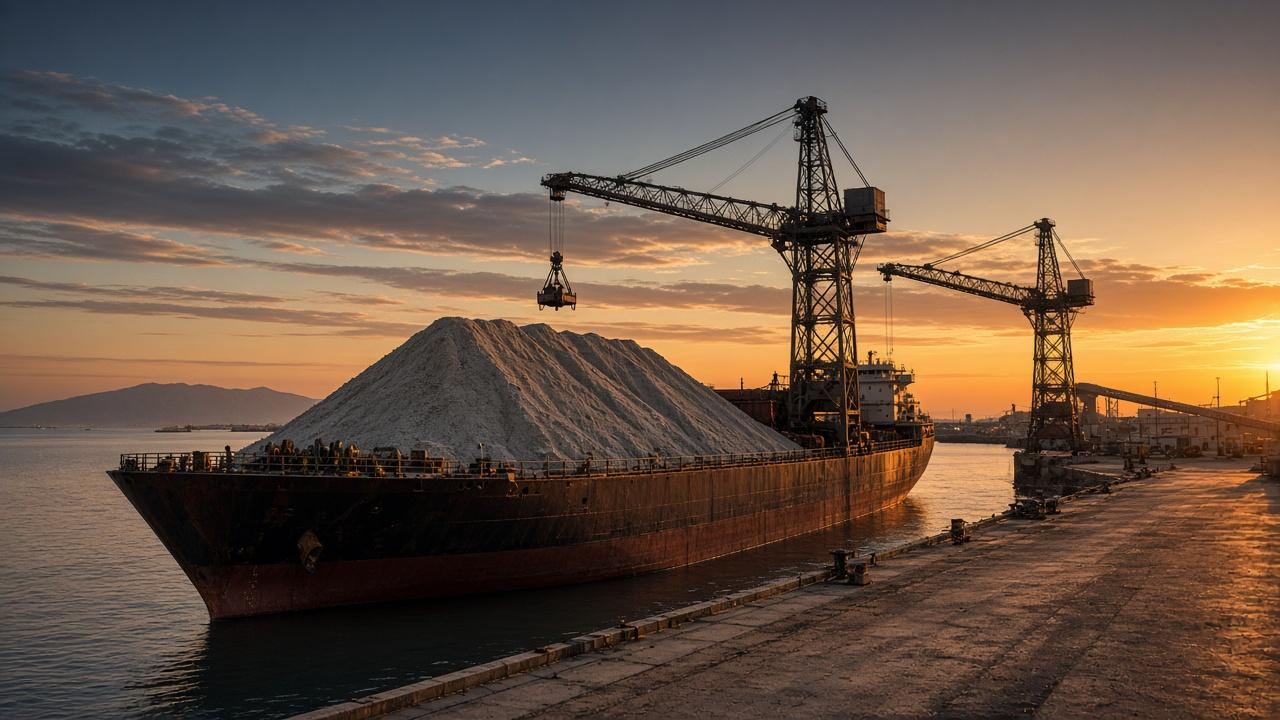
Start with the process that will swallow the filler, then name the mineral, then ask what the lab measures. A bag that looks fine and white can be calcium carbonate, a silica flour, or another industrial mineral, and those are different purchases. Mineral fillers for plastics are qualified against dispersion, the compound that was already approved, and the wear and mechanics that compound showed. Fillers for paints are qualified against the mill base, the binder demand and the colour the can has to hit. A single price per tonne, with no mineral and no test, is not an offer.
NAGTAR uses the industrial fillers line when the grade is not already a straight calcium carbonate or a specialty silica. If it is carbonate, go to calcium carbonate. If it is a silica flour or a tight silica cut, go to specialty silicas. The note that separates those two known minerals is calcium carbonate filler or silica filler. This page is for the buyer who still has to say which mineral the line wants, and for the buyer whose filler is neither of those two by default.
What buyers mean by a mineral filler
A mineral filler is a fine mineral added into plastics, paints, paper, adhesives, rubber or a construction compound. Plants add it for cost, for rheology, for brightness, for mechanical behaviour, or because the formula has always carried it. The performance is the grade. The word filler does not specify a product.
In plastics, the buyer is usually a compounder, a masterbatch plant or a converter who inherits a compound sheet. They talk about particle size because it changes dispersion and surface. They talk about the mineral because a swap changes the screw, the stabiliser package or the impact result they signed off. They talk about moisture because a wet filler in a melt is a processing defect. Brightness matters in a white or natural compound and matters less in a black one.
In paints and coatings, the buyer is a mill that already has a binder, a pigment and a way of measuring colour and consistency. They talk about particle size because it changes gloss, settling and how the grind feels. They talk about oil absorption because it changes how much binder the mineral takes up, and therefore the cost and the film of the formula they already run. They talk about brightness when the can is white or pastel. They talk about the mineral when chemical resistance or acid exposure is part of the duty.
Both buyers are tempted to send a photo of a bag and a destination. That tells us the packing habit of the last supplier. It does not tell us the grade. Big bags are common on this line. They are not the specification.
The decision before a price
Put the inquiry in one of four places.
- The formula or the data sheet names calcium carbonate, ground or precipitated. Move the file to the carbonate page. Particle size and brightness are still real questions. They are carbonate questions.
- The formula names silica flour, a silica extender or a silica cut. Move the file to specialty silicas. Iron and the cut lead. Do not keep it here as a generic filler to save a step.
- The mineral is another named filler, or the plant knows the tests but not yet which Algerian mineral can meet them. Stay on industrial fillers. Send the process, the tests and the packing. We will say whether a carbonate, a silica or another grade is the honest match, and we will move the file if the match is one of the named lines.
- The email is a tonne price request and a port. Send it back. There is nothing to qualify.
A filler price with no spec is not an offer. It cannot be compared with another filler price, because the two bags may not be the same mineral, the same cut or the same brightness method. Ask for the missing items, or decline the comparison. Do not invent the spec to keep the negotiation moving.
If purchasing is under pressure to "just send something white", the process owner has to sign the mineral. A purchasing substitution that the plant did not approve becomes a complaint the contract will be asked to pay for. The contract should describe the grade the plant agreed, in the packing the plant can empty.
Specifications to ask for, not to assume
We do not publish one filler data sheet for every use. Particle size, brightness, oil absorption, moisture and the mineral species are reviewed against the process. Each of them is a question until a lot is tested.
Mineral species comes first. Write calcium carbonate, silica, or the other name the formula uses. If you do not know, say which properties the line needs and which failures you have seen, and expect a question back rather than a guess sold as a grade.
Particle size comes next, in the lab's language. A d50 with a method, a residue on a named sieve, a top size, or a band. The figure is your target. We confirm what the offered lot measures. We do not keep a public mesh or a public d50 for fillers. Two plants that both say "fine" are not asking for the same cut.
Brightness and whiteness are requested when the compound or the paint measures them. Name the method and the geometry your lab uses. A verbal "white" or "high brightness" is not a result, and a brightness figure from one method is not a figure from another. We will not fill a blank with a typical brightness. If your standard is a retained sample, say so, and send the method that sample was read on.
Oil absorption is a paint question and sometimes a plastics question. Ask for it with the method your lab already trusts. It changes binder demand. It is not a reason to declare two minerals equivalent, and it is not a number we print in advance of a lot.
Moisture, and the point in the chain where it is measured, belongs on both plastics and paints briefs. A filler that was dry at the mill and wet at the hopper has a packing problem as much as a mineral problem. Other limits, such as iron in a silica cut or a residue that scratches a film, belong on the brief only if the plant will enforce them.
Send the limits that fail the goods. A long list copied from another industry's sheet creates arguments. A short list that omits the real release test creates a claim after the bags are in the warehouse.
Uses, and the wrong product in the plant
Plastics. In polyolefins, PVC and masterbatch, calcium carbonate is often the mineral the formula already carries, which is why a carbonate brief should leave this page once it is recognised. Silica shows up when the compound was built on silica. The wrong product is the other mineral offered as a drop-in because the bag is white and the cut looks close on a single number. Dispersion, surface, moisture and the mechanical checks the plant cares about were run on one grade. A trial, if you want one, is a trial of a named grade at a named cut, not a quiet substitution on a production order.
The plastics misfires we see are practical. A compounder sends "filler for PP, 500 tonnes, big bags" and expects a price the same day. There is no mineral, no cut, no moisture ceiling and no colour requirement. Any white powder could be invoiced against that sentence. Another plant changes from carbonate to silica to chase a unit price and discovers the line was approved on carbonate. The price comparison was never a comparison of the same job. A third plant specifies a d50 from a brochure and has no method, then rejects a lot that their own incoming test, run differently, does not reproduce.
Paints and coatings. An extender is there to occupy volume in the film without pretending to be the prime pigment. Carbonate is a common extender when the formula says carbonate. Silica is specified when the film needs what that plant uses silica for, often hardness, scrub or chemical resistance, always as a qualitative reason on their sheet rather than as a number we would invent. Oil absorption and particle size decide whether the mill can use the lot in the existing letdown. Brightness decides whether a pastel still matches. The wrong product is a silica quoted into a carbonate formula, or a coarse filler quoted into a gloss system that was approved on a finer cut.
Paint misfires follow the same pattern as plastics, with different tests. A buyer asks for fillers for paints and attaches only a brightness target, with no method and no mineral. A second buyer has a full carbonate specification and asks us to "match it in silica" without a reformulation. A third accepts a lot on a lab grind and then receives a second shipment with a different top size, because the contract only said fine. The grind that passed was a sample. The contract needed the cut.
Paper, adhesives, rubber and construction compounds also use mineral fillers. If that is the process, say so. Do not force the brief into a plastics or paints template. The tests change. The packing may not.
Across all of these, the wrong product is also the right mineral in the wrong cut, or the right cut with no control on the property the plant actually releases on. Name the release tests. A grade that passes a test you do not run, and fails the one you do, is a miss even when the mineral name was correct.
Packing and cargo
Big bags are the frequent format. Containers are the frequent mode. Bulk is discussed when the volume and the grade allow clean handling, and the receiver can take a fine powder without the bag. Parcel size follows the grade. It does not follow the 5,000 to 30,000 tonne bracket used for industrial bulk minerals such as silica sand. That bracket is the wrong default for a filler.
Say how the bag is emptied. Spout or flat bottom, liner or not, the load the hoist can lift, and whether the plant can take a palletised bag or only a sling. A liner is part of moisture control for hygroscopic or dusty cuts. Marks and lot numbers matter as soon as two grades share a container. They should not share a hopper.
Container condition is a quality item. Damp floors, holes and a previous dusty cargo mark a fine filler after the producer’s moisture test was acceptable. On a first shipment, inspect the box before stuffing if the contract says so. Weight is a weighbridge figure, tied to the packing list. A draft survey is for a bulk parcel that has actually been agreed.
Packing misfires are dull and expensive. Bags without liners sift and cake. A carbonate and a silica stuffed in one container without separate marks become a blended unknown at the plant. A bulk tipper booked for a filler the silo cannot keep dry turns a grade problem into a logistics problem. A buyer who copies a cement bag specification onto a filler inquiry gets a valve bag the hopper was not built for. Send the packing the receiving plant uses today.
If the programme grows, revisit packing rather than stretching the first bag plan forever. A move from big bags to bulk, or from containers to a hold, changes sampling, moisture risk and the Incoterm that makes sense. It is a new logistics qualification on the same grade, not a footnote.
Documents, inspection and Incoterms
Papers follow the grade and the destination. The usual set is a commercial invoice, a packing list with marks and numbers, the transport document, a certificate of origin from the competent Algerian chamber, a weight certificate, and a certificate of analysis for the tests the contract names. Those tests are the mineral identity where it can be shown, the particle size as agreed, moisture, and brightness or oil absorption only when they were contractual. The sheet names the method, the laboratory and the date. A safety data sheet is included when the destination asks for it.
Inspection is named before stuffing. The inspector's certificate is the inspector's. Sample from the filling stream or from an agreed number of bags. A handful from one bag mouth is not a lot sample. Seal a reserve and write who keeps it, especially on a first production lot into a plant that has never run the source. If brightness is contractual, the retained plaque or the instrument conditions need to be something both labs can repeat. Argue the method before loading, not after the paint is in the can.
Incoterms 2020, named place included:
- FCA at an agreed point in Algeria is the common term for bagged and containerised fillers.
- FOB at a named load port when the cargo is loaded on a vessel and freight and insurance stay with the buyer.
- CFR to a named destination port when we arrange the ocean freight and you insure.
- CIF when we also arrange marine insurance to an agreed cover, with the insurance certificate in the set.
"FOB Algeria" does not name a port. Payment is discussed with the term, because Algerian export proceeds go through a bank domiciliation. Do not lock a price, a term and a half-written specification on the same day. The specification is what the price is for.
How an Algerian filler lot is qualified
We match a process brief to a supply that can make that mineral at that cut, pack it, and repeat it. If the brief resolves into calcium carbonate or a specialty silica, the file moves to that line and is qualified there. If it stays a broader filler, we still do not offer a nameless powder.
The checks are whether the mineral is the one the plant named, whether the cut is reachable, whether brightness or oil absorption can be reported by the method you named, and whether the bags exist. Export authorisations that apply to the specific product are confirmed before the quote is treated as firm. If a limit is not reachable, we say so. We do not substitute a nearby grade under the same product name.
A first shipment into a new plant is often a trial lot in the contractual packing, at a volume the line can run without betting the month's production. The trial approves that grade. It does not approve every white filler in the family, and it does not approve a second cut. Record the measured results. The next order should cite them.
What to send
Send the brief through the trade inquiry.
- Process: plastics compound, masterbatch, paint, coating, or the other use, in a few words.
- Mineral, if known. If unknown, say what the formula was last approved on.
- Particle size as a target, with method. Brightness with method, if you measure it. Oil absorption with method, if the mill uses it. Moisture.
- Tonnes, spot or programme, and the packing the plant can empty.
- Destination, Incoterm with a named place, window, inspector and import documents.
If you already know the mineral is calcium carbonate or a silica flour, send the inquiry on that page instead. You will get a faster qualification, because we will not spend a round trip discovering the name you already had.
Can you price a filler before the mineral is named?
We can tell you the inquiry is incomplete. We cannot price a grade that has no mineral, no cut and no release test. Two white bags are not one market. Send the process and whatever the plant does know. If the mineral is still open, say that plainly, and we will ask what a passing lot has to do. A number given before that work is not a price you should compare with anyone else's number.
Which tests should a plastics compounder send?
The mineral, the cut with a method, moisture, and any colour or mechanical limit the incoming inspection actually uses. Add the polymer family in a word, so a PVC brief is not read as a polyolefin brief. If the compound was approved on calcium carbonate, say that and move the file. If it was approved on silica, say that too. A d50 alone, with no method and no mineral, is not a compound specification.
Which tests should a paint plant send?
The mineral, the cut, oil absorption with the method the mill uses, and brightness with the method, when colour is controlled. Add the kind of paint in a few words: decorative, industrial, primer, or the binder family if that changes the filler. A brightness target with no method and no mineral cannot be matched. A carbonate specification with the product name crossed out and silica written in is a reformulation, not a purchase.
We already know it is calcium carbonate. Where does the brief go?
To the calcium carbonate page, with the cut, the brightness method if you have one, moisture, packing and destination. This fillers page will only route you there. Ground versus precipitated, if your plant distinguishes them, belongs in that carbonate conversation and in the note written for it. Do not ask for a generic filler price in parallel and hope the two offers describe one product.
We already know it is a silica flour. Where does the brief go?
To specialty silicas, with the cut, the iron ceiling if colour or chemistry needs one, moisture, the bag and the destination. A silica flour is not a leftover category of industrial filler. It has its own qualification because iron and the cut decide the lot. Keep carbonate and silica in separate inquiries even when one plant buys both.
Are big bags assumed?
They are the frequent format, and they are still confirmed. Tell us if the plant needs a spout, a liner, a given working load, or a bulk silo instead. A filler that is right chemically and wrong in the bag fails at the hopper, which is a failed shipment. Containers are the usual partner to the bag. Bulk is a separate discussion when the tonnes and the grade both support it.