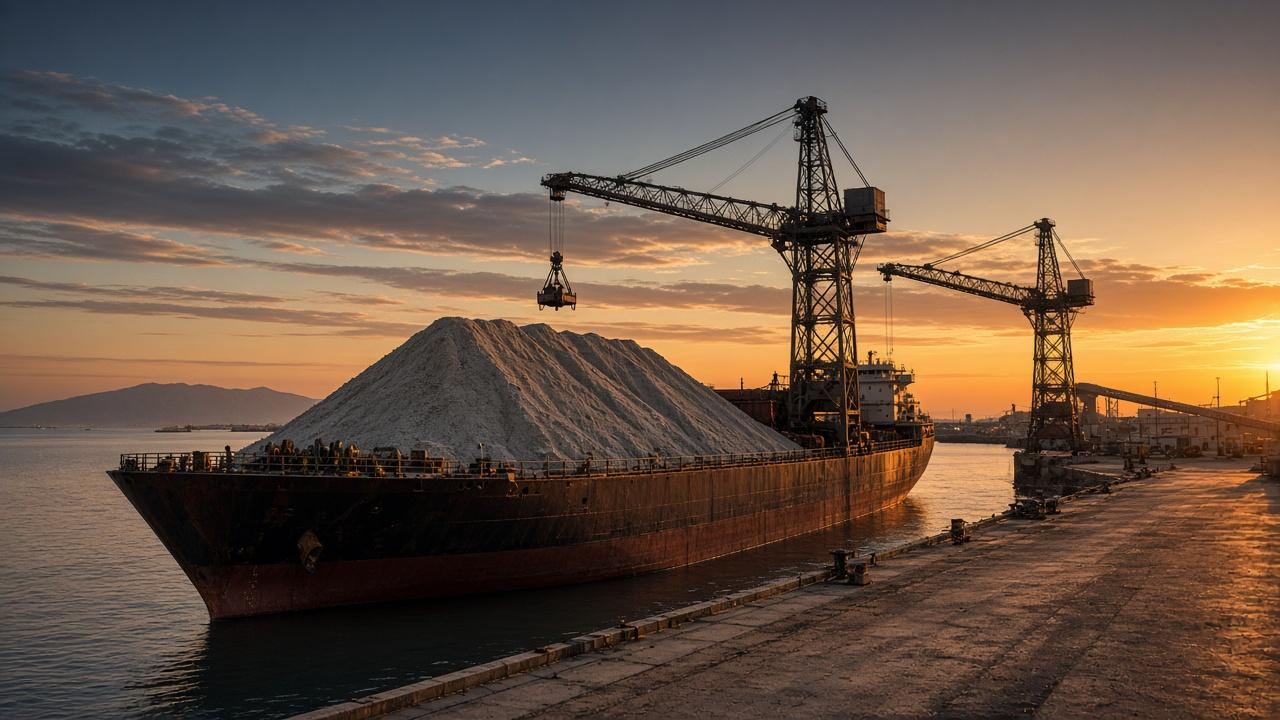
Bulk is the default way to move industrial silica sand or lump when the brief is a cargo. The range we discuss is 5,000 to 30,000 tonnes, depending on the silica and the vessel, and the parcel is confirmed per shipment. It is not a promise of either end of that range, and it does not apply to a flour or to a tight cut. Those briefs leave this page for specialty silicas. If you are still choosing between glass, foundry and construction, start with silica sand for glass. The cargo product is silica.
What decides whether the sand you unload is the sand you bought is less romantic than a pit description: stowage, moisture, and what was in the hold before you.
What buyers mean by a silica sand supply
A silica sand supplier, in the sense that matters, can name the use, the size, the chemistry you actually enforce, and a ship that can carry it without contaminating it. A price and a loading port, with "silica sand" as the whole description, is not yet a supply. Import silica sand adds a second requirement: the documents and the hold standard have to survive a discharge port that did not watch the quarry.
Buyers use the same noun for at least four objects. Glass sand is a melting band plus SiO2 and Fe2O3 as the buyer defines them. Foundry sand is a grain distribution and a shape that a binder can use. Construction sand is a grading envelope. Lump is not sand at all. A flour is ground material and sits on the specialty page. If your note says only "import silica sand", add the use in the next line or expect the wrong questions back.
Bulk means loose in a hold, trimmed, weighed by draft survey, discharged by grab or by a system built for that size. It does not mean "a large amount of bags". Bags and big bags exist when the receiver has no bulk intake, or when the lot is a trial that must stay sealed. They are an exception you should choose, not a correction after the ship is fixed.
The tonne range is a working bracket, not a stock list. Five thousand tonnes and thirty thousand tonnes ask for different ships, different drafts and different discharge times. Finer sand, coarser sand and lump do not occupy a hold in the same way. We do not publish a stowage factor for "silica". The master works from the lot. Your job is to say which silica, so that calculation is about the product you will load.
The decision
Decide whether you are still on this page. If the specification is a flour, a d50, a filler curve, or a purity and size pair that only a mill and a classification plant will meet, stop and send it to specialty silicas. Forcing that brief into a bulk sand stem produces a certificate that answers the wrong tests and a hold full of the wrong physical product. Leaving early is the useful outcome.
If you are on this page, decide the use and the size, then the tonnes the berth and the silo can take inside 5,000 to 30,000. A glass plant with a tight iron ceiling may be limited by hold cleanliness and by how large a parcel you are willing to commit before the loading composite is in. A construction buyer may be limited by draft and by price, and should not be sold a glass discipline they will not test. A foundry may be limited by the need to keep a distribution intact, which a careless grab and a long drop into a dirty pit will undo.
Then decide bulk or bags. Bulk is the default when the receiver has a berth, gear, and covered storage. Bags are the decision when any of those are missing, or when the first shipment is an approval lot that must stay out of the main silo. "Bulk, or bags if easier" is how the packing list and the bill of lading get written for two different operations.
Contamination tolerance is a decision. A glass iron ceiling and a construction grading do not need the same hold. Say which cleanliness you will reject on. A rusty ship after iron-bearing fines can erase a good quarry result. If you will not reject a hold, do not write an iron ceiling as if the quarry were the only source of iron.
Moisture tolerance is the same kind of decision. Sand loaded under rain, or into a wet hold, gains weight that is not silica and can cake or segregate. Your batch house or your concrete plant already has a view on water. Put that view in the contract as a limit and a method, on the loading composite, or accept that you are buying a variable.
Specifications
The cargo does not relax the specification. It raises the cost of a vague one. Write the use, then only the tests someone will run on the loading sample.
For glass, that is usually SiO2, Fe2O3, the other oxides you named, moisture, and a sieve band. The numbers are yours. We confirm them on the qualified lot and we do not print a standing iron limit or a standing silica floor. How to set those requests is in the glass sand note. For foundry, write the distribution, the fines, and any clay, shape or refractoriness test you actually approve on. For construction, write the grading envelope and the cleanliness or silt test the specification you build to already contains. Lump needs a top size and a bottom size, and a statement that lump is what the plant can crush or feed.
Chemistry without a basis is a future dispute. Dry and as-received results diverge as soon as the sand is wet. Size without sieve names is a future dispute of a different kind. "Fine", "medium" and "glass grade" are not results. Give the screens.
A specification copied in full from a flour data sheet, then pointed at a bulk sand, should be sent back by you before we do it. Particle-size lasers, brightness and a filler oil-absorption figure are specialty-silica language. If they are mandatory, this cargo page is the wrong place. If they were copied by habit, delete them so a sound sand is not failed on a test it was never sold to meet.
Previous-cargo contamination is a specification if you write it as one. "Clean hold" is not. Name what the previous cargo must not have been, or name the cleanliness standard and who inspects it, and name the chemical or the sieve result that will be treated as evidence of contamination. Iron fines from a previous ore, cement dust, and bauxite are the practical cases for a glass sand. Clay and organic rubbish matter more for a foundry or a filter. A construction sand still should not arrive as a mixture with the last cargo, but the rejection test is the one in your grading contract, not a glass iron method you do not own.
State whether one loading composite covers the whole bill of lading. A two-port discharge needs a rule: one sample for the ship, or a sample for each parcel. Silence becomes an argument at the second berth.
Uses and the wrong product
Bulk silica is a way of moving a named use. It does not invent a quality. Glass, foundry and construction remain different orders, and a hold that is large does not average them. If you are unsure which use you are serving, the glass note separates them. The cargo version of the mistake is filling out the tonne target with a second, cheaper sand. Do not. One use, one size, one lot identity on the bill of lading.
The wrong product we most want you to recognise quickly is a flour or a tight cut described as "sand, fine". Grinding and classification change flow, dust, moisture behaviour and packing. They also change which page the inquiry belongs on. Specialty silicas are where that brief is qualified, often in big bags or containers rather than in the bulk range on this page. We will redirect it. We will not stretch a sand stem until the certificate looks like a flour.
Lump offered against a sand silo is the next miss. Lump can be the right industrial product for a buyer who crushes or who feeds lump on purpose. It is the wrong product for a furnace, a foundry mixer or a concrete plant set up for sand. The stowage and the grab behaviour differ. Say lump in the inquiry if you need it, and do not let a stem of sand be completed with lump to make the draft.
Construction sand bought as import silica sand for a glass campaign fails at the furnace, not at the quarry gate. Glass sand bought for a civil contract fails the budget and sometimes the grading. Foundry sand dumped as a bulk construction fill can be a waste of a distribution you paid to keep. Write the use on the recap in words the surveyor and the receiver will both recognise.
A trial in bags can approve chemistry and size on that packed lot. The hold, the previous cargo and the moisture path of a ship are still untested. When you move to a stem, take a new composite. Do not paste the bag certificate onto the bill of lading.
Packing and cargo
Bulk is the default. The ship needs a stowage picture it can use: sand or lump, an idea of the size, and whether the material flows, hangs or dusts. Do not invent a cubic-metre figure from another commodity. If the only density you have is from a different cut, say that and let the shipper and the master close it on the lot being loaded. A flour's stowage is not a sand's stowage, which is one more reason the flour left this page.
Trimming matters for stability and for what the grab sees. Fines travel differently from coarse grains. A poorly trimmed or carelessly discharged cargo can show a size result in one hatch that the loading composite, taken properly, did not. That is a handling fact. Specify sampling across the parcel so one corner does not become the whole story, and specify discharge into a clean pit so the sand is not "failed" for dirt added ashore.
Moisture is managed at loading. Rain stops the spout when the contract says it does, and someone has to have the authority to stop. A wet hold, a hold washed and not dried, or a previous cargo that left damp fines, will raise moisture and can cake a fine sand into lumps your screen did not make. Covered storage at discharge is part of the same subject. A cargo bought dry and then left in an open pile through weather is a different material, and the claim path should say so.
Contamination from the previous cargo is the glass buyer's main operational risk and a real risk for everyone else. The hold should be inspected empty, against a written standard, with the right to reject before loading. "Swept" is not a standard. Scale, previous-cargo stains, and residues in bilges and frame pockets are where a later iron or alumina surprise comes from. If the last cargo was an ore, a cement or another dusty mineral, assume you need a higher standard than a visual glance from the hatch coaming, or choose another ship.
Bags and big bags are the exception: no bulk gear, an approval lot, or a cut that must not share a silo. Marks, unit weight and a big-bag working load are part of the booking. They do not cancel moisture or contamination. FCA usually fits that packing. A hold stays on FOB, CFR or CIF.
The parcel is confirmed inside 5,000 to 30,000 tonnes once the silica, the gear and the draft are known. If the silo cannot take the lift, price a smaller ship or a split before fixture. Deadfreight is a decision, not a surprise on the day of the draft survey.
Documents, inspection and Incoterms
The analysis and the size report refer to the loading composite unless the contract names another point. Methods, laboratory, date and basis sit on the same page as the limits. A narrative certificate ("suitable for glass" or "foundry quality") does not replace SiO2, Fe2O3 or a sieve table. For a construction cargo, the grading result replaces a glass sheet you never intended to enforce.
Weight is a draft survey on a bulk stem, or a weighbridge where the port weighs. Displacement is not chemistry and not a sieve. File the weight certificate separately so a shortage argument stays a weight argument. Moisture disputes sometimes pretend to be weight disputes, because water is mass. The way through is a moisture result on the agreed sample and a contract that says whether the price is dry or as-received.
Hold inspection is a document if you appoint it: empty-hold condition, previous cargo declared, and a pass or fail before the first tonne. Sampling records, increment count and the reserve seal are the other half. Discharge samples can run your plant. They are a weak claim sample once the sand has met your hopper, your water and your dust. If you want discharge rights, write the method and the time limit.
The commercial set is the invoice, the bill of lading as the contract describes it, a certificate of origin from the competent Algerian chamber, the weight document and the quality papers. Bags add a packing list. An independent inspector's certificate is theirs, not a letter from us.
FOB means we deliver loaded on board at the Algerian load port. Freight, insurance and discharge are yours, and risk passes as the cargo comes aboard, hatches included. CFR means we arrange freight to the named port and you insure. CIF adds insurance at the agreed level. FCA hands bags or containers to your carrier at an agreed point. Algerian proceeds pass through a bank domiciliation, so the payment shape is agreed with the Incoterm, not after fixture. A hold-rejection right that appears for the first time when the ship is alongside is too late to be a right.
Algerian qualification
Qualification is a lot that matches the use and the size, a storage and loading path that will not soak or contaminate it, and a receiver who can take the parcel. It is not a national stock of "silica sand" and it is not a list of pits we publish. A lot prepared as a construction grading is qualified for that grading. It is not quietly a glass sand because the colour is light.
Where the brief is a flour or a classified cut, qualification happens on the specialty silica line, with its own packing logic. We do not pull that grade into the 5,000 to 30,000 tonne bracket to make a stem look industrial. Where a bulk sand lot cannot meet a tight iron or size window, we say so before a ship is discussed.
Export runs through a registered exporter, with domiciliation and a customs declaration at the load port. Authorisations that attach to the specific product are checked before the quote is firm. The load port follows the lot and the vessel, including whether the berth can actually offer the hold standard your specification assumes. Buyer, receiver, vessel and destination are screened. The steps from brief to loading are the supply and export process. Silica adds cleanliness and size. It does not add a shorter process.
What to send
Send the use, the size on named sieves or a top and bottom, and only the chemical limits you will enforce. For glass that usually means an SiO2 request and an Fe2O3 request, plus moisture. For foundry, the distribution and the tests your approval uses. For construction, the grading you build to. Then the tonnes you can receive in one lift, the destination, bulk or bags, discharge gear, laycan and Incoterm.
Say what the previous cargo in the hold must not be, if you have already been hurt by contamination, and who may reject the hold. Say if a safety or environmental document is something the discharge port has asked for. Do not send a flour specification to this queue.
Use the trade inquiry and select silica for a sand or lump cargo. Select the specialty path if the brief is a flour or a tight cut. We answer with a parcel that can be fixed inside the range the ship allows, or with the reason it cannot.
What parcel size belongs in the first message?
The tonnes your storage and your berth can take, and the tonnes you would want if the draft allows. We discuss 5,000 to 30,000 tonnes depending on the silica and the vessel, confirmed per shipment. A finer sand, a coarser sand and a lump do not imply the same ship. If you can only take bags, say that, and do not stretch the bulk range onto a plant with no quay gear. If the need is a few hundred tonnes of a tight cut, this range is the signal that you are on the wrong page.
When do I leave for specialty silica?
When the product is a flour, when the size is a classified cut or a d50, or when purity, iron and particle size together are a filler or a special-glass specification that a screened cargo sand is not offered against. Go to specialty silicas. Staying here and asking the bulk stem to "be a bit finer" produces the wrong packing, the wrong tests and a lost laycan.
How does the previous cargo get into a silica specification?
Through the hold. Residues, scale and dust add chemistry and sometimes a size fraction the quarry did not ship. For a glass sand the usual damage is iron or alumina. For other uses it is clay, cement dust or mixed rubbish in the fines. Write a hold inspection with a right to reject, and name the previous-cargo types you will not follow. A clause that says "clean" and appoints nobody is a diary entry.
Does moisture change the weight I pay for?
It changes the mass and it changes the dry chemistry you think you bought. If the price is as-received, water is part of the tonnes and your plant must dose accordingly. If the price is dry, the moisture method and the sample point have to be in the contract or you cannot get there. Agree which one before loading. A discharge sample after rain on the quay is a poor way to reopen a dry-basis price.
Is bulk always better than bags?
Bulk is the default when the receiver can take a hold and keep it covered, because it matches the way industrial sand is actually consumed. Bags are better when the intake does not exist, when the lot is a sealed approval, or when a small specialty cut should never have been on this page. Bags add marks, breakage and a packing list. They do not add a higher geology. Choose them for a handling reason.
Can one bill of lading cover two uses?
It can cover one contractual specification only. If part of the cargo is for a glass furnace and part for a civil contract, those are two acceptances, two sample rules and usually two stems. A single "silica sand" bill with two hopes attached will be argued against whichever test fails first. Split the inquiry if the uses differ. Keep one use on the recap if they do not.