Buy silica sand or lump when the plant can take a bulk mineral and the job is glass batch, foundry or construction sand. Buy silica flour when the plant needs a finer cut, almost always in big bags or containers, and the brief is a particle size plus the iron level the process can live with. Those are two cargos. They need two descriptions, two sampling plans and two contracts. The comparison silica sand vs silica flour is useful only after the receiving plant has said which physical product it can discharge and run. A single line that says "silica" is not a purchase.
If both products are required, raise both files. Do not park a flour parcel inside a sand fixture, and do not describe a hold of sand with a flour data sheet because both materials are rich in SiO2. The certificate, the bill of lading and the claim all need one product to point at. NAGTAR treats industrial silica sand and lump and specialty silica cuts, including flour as separate supply lines for that reason.
What buyers mean by the two names
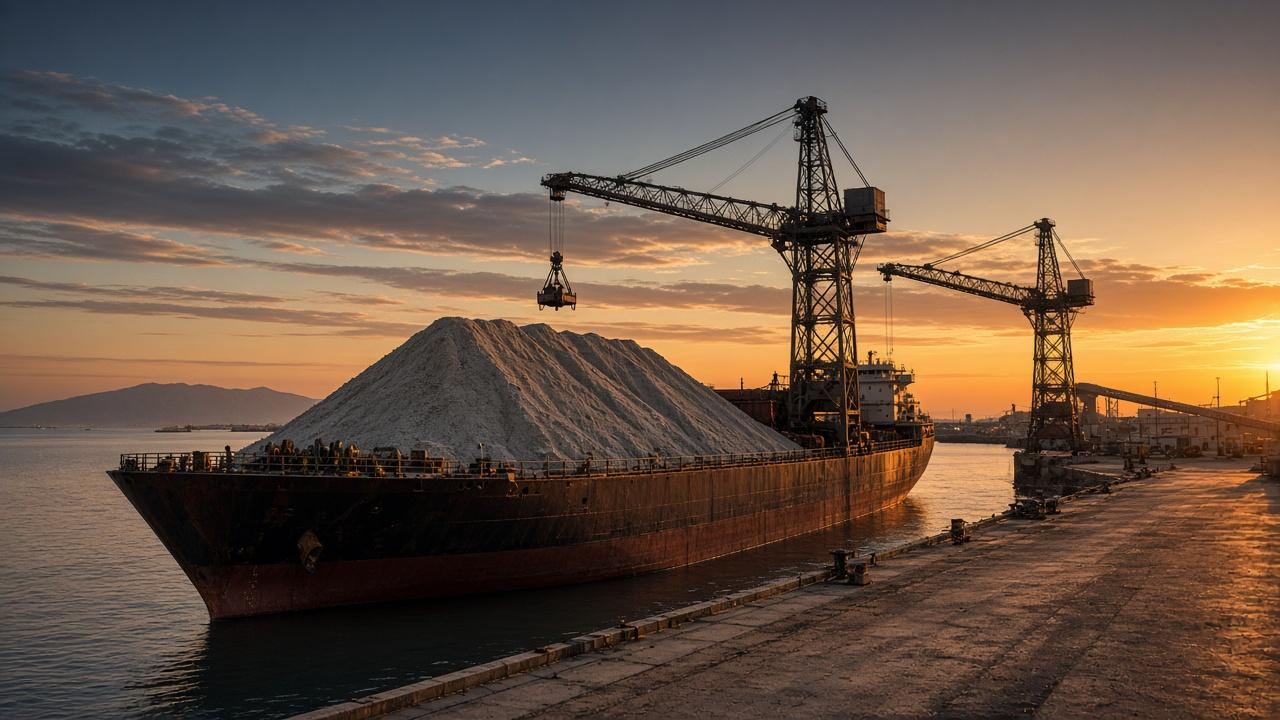
On a trading desk, silica sand means a granular product, sometimes a lump that will be sized, shipped loose in a hold. Glass, foundry and construction buyers use it as a raw mineral. The working cargo bracket is 5,000 to 30,000 tonnes, depending on the silica and the vessel, confirmed shipment by shipment. Bags appear only when the destination cannot receive bulk. How that cargo is put together sits in bulk silica sand supply. Glass size and chemistry questions sit in silica sand for glass.
Silica flour means a ground or tightly classified silica, fine enough that the plant talks about a cut rather than a hold. Buyers in fillers, coatings, selected ceramics and some industrial processes ask for it when a sand grain will not disperse, will not pass a screen, or will not meet an iron ceiling written for a fine grade. In the French trade the finer and tighter grades are called silices spéciales. That line is quoted from the specialty silica page, in big bags and containers as the normal plan. Bulk is discussed only when that particular grade and that particular volume can be handled cleanly. The 5,000 to 30,000 tonne bracket belongs to sand and lump. It is not the default parcel for a specialty cut.
Buyers mix the words. A compounder writes "silica sand" while the extruder is fed from big bags. A glass buyer writes "silica flour" because a previous supplier used that phrase for a fine sand. Follow the equipment and the test the plant will run: a sieve curve on a granular sand, or a finer cut with an iron figure on a powder. How to write the cut and the iron ceiling is the next note if the product is the powder.
The decision before the contract is drafted
Decide the physical product, then the packing, then the price. The other order is how a sand offer gets dressed up as a flour, or a flour offer gets stretched toward a hold it should not fill.
The decision has four practical branches.
- The plant discharges bulk, the use is glass, foundry or construction, and the size is a sand or a lump. Open the silica file. State the use, the size range, any SiO2 floor or iron ceiling the furnace or the mould shop already uses, the tonnes, and the destination.
- The plant discharges big bags or containers, and the specification is a fine cut. Open the specialty silica file. State the cut the way the lab measures it, the iron ceiling if there is one, the use, the tonnes, and how the bags will be emptied.
- The plant needs both a campaign of sand and a separate filler cut. Open two inquiries. Give them different reference numbers. Accept two offers, two laycans or two container plans, and two document sets.
- The email says only "silica" and a destination. Send it back. There is nothing honest to quote until the product is named.
One description for both products fails in ordinary ways. The packing list, the sampling method and the claim each need one good. A per-tonne figure with no product, no size and no packing is not an offer. Sand is priced as a cargo. Flour is priced as a grade in a stated pack.
Specifications to put on the brief
Specifications are requests. They are confirmed on the lot that is offered. NAGTAR does not publish a standing mesh, a standing d50, a standing purity or a standing brightness for either product. If your plant has those limits, send them. The certificate later reports what was measured on that shipment, with the method, the laboratory and the date.
For sand or lump, the useful brief names the use and then the limits that use already carries.
- Size, in the plant's own words: a top size, a bottom size, a retained band, or the sieve series the furnace or the foundry already uses.
- SiO2, if the process has a floor.
- Iron, usually as Fe2O3, if colour, transmission or a chemical limit depends on it. Alumina and other oxides only if the plant already controls them.
- Moisture, and whether the figure is at loading or at arrival.
- Clay, fines or loss on ignition when the use is foundry and those tests are part of the shop's release.
- A statement of what the previous cargo in the hold may not have been, if the receiver is sensitive to cement, clinker or fertiliser dust.
For flour, the useful brief is shorter and stricter.
- The cut: a d50 the formula uses, a residue on a named sieve, a top size, or the screen series in the plant lab. If the lab speaks in mesh, name the sieve standard behind the mesh word. A mesh number on its own is not a grade we keep on a shelf.
- Iron, as a ceiling the colour or the chemistry needs. Send the method if your lab is particular.
- SiO2, if you have a floor.
- Moisture, because a fine cut cakes and a container sweats.
- Whiteness or brightness only when the coating or the compound measures them. Say the method. "White" is not a specification.
- The packing the discharger can take, which is part of the specification even though it is not a chemical result.
A sand sieve report answers a sand contract. A flour certificate answers a flour contract. Every number stays a target until a lot is qualified. We say when a requested ceiling looks reachable. We do not fill a blank with a figure from another cargo.
Uses, and the product that misses the plant
Glass batch wants a sand the furnace can melt on the schedule the plant already runs. Size, iron and the other oxides in the batch calculation are confirmed per lot. Flour dusts in the batch house and arrives as bags on a jetty built for grabs. Batch sand stays on the silica page and the glass note. A workshop that has specified a fine silica is a second file.
Foundry sand is judged on the size curve the mould needs and on the clay or fines the shop measures. A construction silica can carry a similar headline silica content and still fail the mould. Say which shop. Construction silica itself is a size and cleanliness question. The site does not run the tests a flour needs.
Fillers, coatings and some industrial processes want the flour or a tight cut, fed from bags into a disperser, a mill or an extruder. Iron moves colour. Particle size changes how the mineral sits in the binder or the polymer. The plant writes those limits. If the formula was built on calcium carbonate, read the mineral again. The grade note on specialty silica explains when the brief is really another filler.
Misfires that show up often:
A glass buyer asks for a large tonnage of "silica" and attaches a flour sheet from a filler purchase, because both documents mention SiO2. The furnace needs sand in a hold. The terminal cannot empty those bags, and the batch house is built for sand. The file belongs on the bulk silica line, with the glass use named.
A masterbatch plant asks for "silica sand" because that phrase is on an old order. The line is fed from big bags, and the compound was approved on a fine cut. A sand cargo cannot be discharged there, and the grain will not disperse as the approved cut did. Open the specialty file and send the cut and the iron ceiling as requests.
A trader offers sand in the hold and containers of flour under one description, "silica", on one invoice. Sampling, a claim and the customs entry then have two physical goods and one name. Split the booking before the vessel is discussed.
Packing and cargo
Sand and lump move in bulk. The 5,000 to 30,000 tonne range is a working bracket for that industrial cargo, depending on the product and the vessel, confirmed per shipment. It is not a target for flour. A hold that last carried cement, clinker or a dusty fertiliser can coat a silica sand, so say what the receiver will refuse as a previous cargo. Agree moisture at a named point, usually loading, because rain in an open hold changes the cargo. Weight is commonly a draft survey. Bags are the exception, used only when the destination cannot take bulk.
Flour and other specialty cuts move in big bags and containers. The bag has to match the discharger: spout or flat bottom, a liner if the cut dusts or takes up moisture, a safe working load the warehouse accepts. Marks and lot numbers stay readable so two cuts are not poured into one hopper. A damp container, a damaged floor or a dusty previous cargo will mark a fine silica. Stuffing is a survey point when the contract says so. Weight is a weighbridge conversation more often than a draft survey.
Bulk for a specialty grade is possible when the grade survives bulk handling without losing the cut or picking up contamination, and the volume makes a bulk plan sensible. Until both are shown, the offer stays on bags and containers. A hold of flour requested because the sand page mentions 5,000 to 30,000 tonnes is the wrong transfer. That bracket is not applied to specialty grades by default.
Packing failures are ordinary. Unlined flour bags sift into the container. Sand in big bags at a jetty that only has a grab loses the rate the laycan assumed. A container of flour at a terminal that expected bulk silica sits on the quay while the furnace waits. The two products do not share a hold. Put the packing in the inquiry.
Documents, inspection and Incoterms
The document set follows the product and the destination, and it is agreed in the contract. The usual papers are a commercial invoice in the contracting entity's name, a bill of lading or the transport document the term requires, a certificate of origin from the competent Algerian chamber, a weight or quantity certificate, and a certificate of analysis. Bagged flour also needs a packing list with marks and numbers. A safety data sheet is added when that destination asks for one.
The analysis states what was tested on that cargo, the sampling method, the laboratory and the date. A sand sheet reports the size band. A flour sheet reports the cut and the iron result if iron is contractual. One sheet does not cover the other product.
Inspection is appointed before loading when the buyer or the destination wants it, and the inspector is named in the contract. The inspector's certificate is the inspector's. For a sand hold, check cleanliness and previous cargo, and sample through the loading stream rather than from a stockpile that will not be the cargo. Agree who keeps a reserve sample. For flour, check bag condition, liners, marks and the container, and name which bags are opened. A sample from the top of one bag does not describe a container.
Incoterms are Incoterms 2020, and the named place is part of the term. The desk works with four.
- FOB, named Algerian load port: the cargo is delivered loaded on board. Freight, insurance and discharge sit with the buyer. This is a natural term when the buyer is already fixing a bulk vessel for sand.
- CFR, named destination port: ocean freight is arranged to that port. Marine insurance stays with the buyer.
- CIF, named destination port: as CFR, with marine insurance arranged to the agreed cover. The insurance certificate joins the set.
- FCA, named place in Algeria: the cargo is handed to the buyer's carrier at the agreed point. This is the usual conversation for big bags and containers.
"FOB Algeria" is not a workable term. Name the port. The load port is chosen for the shipment, against the producer location and against whether the cargo is a bulk vessel or a container. A bulk sand and a container of flour do not have to share a port or a bill of lading. Payment is discussed early, because Algerian export proceeds pass through a domiciliation file with a local bank. That constraint applies to each product on its own invoice.
How the Algerian lot is qualified
Qualification is a match between a brief and a producer who can make that physical product, pack it the way the plant receives it, and repeat it. It is not a catalogue. There is no public mesh chart, and a sand lot that has already shipped does not pre-qualify a flour.
The questions are plain. Can this supply make the size the plant named, as a sand or as a cut? Can it meet an iron ceiling or an SiO2 floor on the lot itself? Can it pack bulk for a hold, or big bags that survive the container and the discharger? Is any export authorisation for this mineral in place before the quote is treated as firm? Which load port can take the mode?
A first shipment to a plant that has never run the source is sometimes better as a defined trial lot, with the same specification as the intended contract and a volume the plant can actually test. A trial of sand does not approve a flour. A trial of one cut does not approve a coarser sand from the same quarry. If the grade is not reachable, we say so and stop, rather than shipping the nearest mineral under the name you used.
A quarry loading sand for glass is not assumed to be a grinding plant for flour. If a counterparty offers both, ask which installation makes which product, and keep the offers apart. If a blend is proposed to chase an average iron figure, the contract has to say so. An average that no single increment can meet will fail a sampling plan written on increments.
What to send
Send one product per inquiry. Use the trade inquiry and include the following.
- The product in physical words: silica sand, lump, or silica flour. Add the use: glass, foundry, construction, filler, coating, or the process name.
- The size as a request, in the lab's language. For a flour, the cut or the sieve residue. For a sand, the band the furnace or the shop uses.
- Any iron ceiling, SiO2 floor, moisture limit, or brightness method, each marked as a requirement rather than as a guess about our stock.
- Tonnes, and whether this is a spot cargo or a repeating programme.
- Packing the plant can receive, and any previous-cargo ban for a hold.
- Destination port or plant, the preferred Incoterm with a named place, and the delivery window.
- Who inspects, which parameters they must test, and which documents the import market requires.
If the answer on size or iron is "same as last time", attach the last certificate and say whether that result was a target or merely what arrived. The new lot is reconfirmed on its own.
Can sand and flour share a contract if the price is split into two lines?
A price split leaves one good in front of the inspector, the carrier and customs if the invoice and the bill of lading still say "silica". Two lines work when each has its own description, quantity, packing, specification and sampling. A single claim clause that either product can trigger does not. Keep sand on the bulk line and flour on the specialty line, even in the same month.
Does the 5,000 to 30,000 tonne range apply to flour?
That bracket is the working range for industrial bulk silica, sand or lump, depending on the product and the vessel, confirmed per shipment. Specialty grades, including flour, are planned from the grade outward: big bags and containers first, bulk only when the grade and the volume both allow clean handling. A few hundred tonnes of a fine cut stay on bags. A hold of batch sand stays on the bulk file. If a specialty volume later justifies bulk, that is a new logistics check on that grade. It does not import the sand bracket on its own.
The plant wrote silica and the use is glass. Which file is it?
Start on the silica page, and read the glass note, when the furnace wants batch sand or lump. Send the size band, the iron limit, any other oxide the batch calculation uses, the tonnes, and the discharge port. Move to specialty silica when a separate workshop has specified a flour or a tight cut. A glass company can buy both. Each purchase keeps its own brief.
Can silica flour be shipped in bulk?
It can, when that grade survives bulk handling and the volume justifies a hold. Until both are shown, the plan is big bags and containers. Bulk can break a cut, raise moisture, or pick up whatever the hold carried before. If you want bulk flour, name the cut, the iron ceiling, the tonnes, and how you will discharge a fine product without the bag. We answer for the lot in front of us. A sand cargo that moved in a hold is not evidence that the flour can.
A sand analysis was offered as the certificate for a flour shipment. What should we do with it?
Ask for a certificate on the flour lot itself: the cut the contract names, iron if iron is contractual, moisture, the sampling method, the laboratory and the date. A size band written for granular sand describes sand. An iron result on a sand lot describes that sand lot. If the seller cannot produce a flour sheet, the shipment is sand with a flour label. Stop it before loading. After loading, you are in a claim, and the sample that mattered was the one taken from the bags.
What do you need before you will price either product?
One named product, the size or cut as a request, any chemical ceiling the plant will enforce, the tonnes, the packing, the destination, the Incoterm with a named place, and the window. Add the use in one line, so a foundry sand is not qualified against a glass brief and a flour is not qualified against a hold. Say which item is still unknown. When the brief is complete enough, we quote the lot we can stand behind, or we tell you the grade is not reachable.