What is pozzolan, for a cement buyer, is a siliceous addition that reacts with lime. In a mill it is blended with clinker, and the hydrating clinker supplies that lime. The pozzolan does not replace the kiln, and it is not a finished binder unless the mill has already ground it into cement.
Pozzolanic cement is that finished binder: clinker, the pozzolan addition, a sulfate set regulator, and whatever else the cement standard and the plant quality plan allow, ground and certified as cement. A cargo of natural pozzolan is the addition on its own. NAGTAR treats those as two inquiries. One is a mineral for a grinding plant. The other is cement, and it is quoted from cement supply, not from a pozzolan lot.
The same split applies to blast-furnace slag. Natural pozzolan is not GBFS, and a mill certified for a pozzolanic cement cannot receive slag under the same wording. The comparison sits in natural pozzolan or blast-furnace slag. This note stays on what the mill is buying, which checks belong on the lot, and how the cargo is put together.
French-speaking desks will sometimes write pouzzolane on the inquiry. It is the same material family. The English brief still has to say whether the receiver wants the natural addition, ground or unground, and which cement it will enter.
What buyers mean by pozzolan in a cement brief
Most emails that say "pozzolan" are shorter than the decision they trigger. A trader writes a tonnage, a port, and an Incoterm. A mill engineer is thinking about a cement type, a fineness target, a moisture ceiling, and a silo that already holds something else. The desk has to pull those into one brief before anyone discusses a vessel.
In cement language, a pozzolan is an addition with little cementing power until it meets lime and water. Natural pozzolan is the form listed for this supply: a mineral of volcanic or similar origin, used by plants that blend it with clinker. It is not a brand, and it is not a strength class. Two lots can both be natural pozzolan and still fail each other's contracts, because fineness, chemistry, and moisture were never the same.
Buyers also use the word for the finished cement. "We need pozzolanic cement, bulk or bags" is a cement order. The plant at destination is not going to grind anything. It needs a binder that already meets a standard, with a certificate in the name of that cement. That request goes to cement. If the destination is a grinding plant that already buys clinker and wants to raise the addition rate, the request is the mineral, and the clinker stays a separate line. A ready-mix plant or a contractor cannot discharge a hold of raw pozzolan and call a cement obligation met.
When NAGTAR reads an inquiry, the first sort is simple. Who grinds? If the buyer grinds, we ask for the addition spec and the clinker they will pair it with. If someone else has already ground, we are no longer in a pozzolan cargo. Pretending one nomination covers both only delays the week the surveyor and the mill both need.
The decision before a cargo is discussed
The commercial decision is whether this file is an addition, a finished cement, or a clinker programme that happens to mention pozzolan in the same paragraph. Each one has its own supply path, its own documents, and its own failure mode.
If it is an addition, the mill should know why. A cement standard that names a pozzolanic or composite cement, a lower clinker factor the plant is allowed to sell, or a customer quality plan: each one changes the paper. A standard name without the plant's own limits is not yet a specification. A blend ratio without the tests the lab will run is not one either.
The mill decides the ratio. NAGTAR does not publish a recipe, and we do not advise a substitution rate as if it were a property of Algerian rock. Clinker quality, gypsum, mill circuit, and the cement standard sit on the buyer's side of the table. What we can do is qualify a lot against the limits the buyer writes down: fineness or top size, the chemistry headings they care about, moisture, and any activity test they already use.
There is a timing decision as well. The pozzolanic reaction is slower than the early hydration of clinker, so a blend changes the strength curve the mill already knows. If the plant has not run a trial grind, the first cargo is a trial, and the contract should say so: volume, acceptance tests, and what happens if the lot misses the window.
Price comes after that frame. A figure without fineness, moisture, packing, and a named discharge port is a conversation, not an offer. Nothing is firm until the lot is qualified and the commercial terms are accepted in writing.
Specifications that belong on the lot
We do not keep a public assay for natural pozzolan. Chemistry moves with the source and with the campaign. The headings below are the checks buyers actually argue about. The values are the buyer's limits, then the qualified lot's results. If we do not have a result, we do not invent one to keep a negotiation moving.
Fineness is the first split. Some mills want a ground pozzolan. Others want a coarser feed they will grind with clinker. "Fineness" without a method is not a term. Name Blaine, a residue on a stated sieve, a size curve, or the top size of an unground feed, and say whether the figure is a maximum, a minimum, or a range. A ground lot and an unground lot are different cargoes.
Chemistry is the second split. Cement labs usually look at silica, alumina, iron oxide, lime, magnesia, alkalis, and loss on ignition. Some standards and some internal plans also ask for reactive silica, chloride, or sulfate. Send the panel you enforce and the method, or the standard that defines the method. A list of oxides with empty cells is a request for the lot certificate. It is not a certificate. We share figures when the lot has been qualified, against the panel you named.
Moisture is the third split, and the one operations feel first. Water adds weight the mill did not want to buy, slows handling, and can upset a grind or a blend that was calculated on a dry basis. It also complicates a draft survey if the contract is silent on where moisture is deducted. Put a ceiling in the inquiry if you have one. If you do not, say so, and we will tell you what the qualified lot shows rather than assume a market habit.
Some plants reject on a strength index at a stated age. The method, the age, and the pass mark belong in the contract if that is the case. A verbal "it must be reactive" cannot be sampled. If the test takes 28 days, the shipment plan has to respect that, or the parties must agree which earlier evidence is enough to load.
Colour, chloride, and alkali are the checks that appear when the cement has a customer attached. A precast yard that complains about shade, or a concrete spec that caps alkali, will not be satisfied by a generic mineral description. Flag them at the start if they can stop the lot. Leaving them until the ship is fixed is how a clean loading becomes a dispute at the silo.
Uses, and the products this is not
The ordinary use is blended cement: clinker, natural pozzolan, and a set regulator, ground into a cement the plant is allowed to sell. Some plants meter pozzolan into a cement they already make, under a written recipe. A binder system that is not a standard Portland blend still needs its own spec. The word pozzolan does not carry one.
The wrong product, in order of how often we see it, starts with finished cement. If the bag or the bulk truck at destination must say a cement type and a strength class, buy cement. Natural pozzolan will not pass a cement acceptance test, because it is not cement. It has to meet lime before it binds. Shipping it into a contract that names only a cement standard is a mismatch, not a saving.
The next wrong product is GBFS or any other blast-furnace slag. Slag has its own behaviour in the mill and in the concrete. It is not a fallback when a pozzolan lot is late. The silo, the cement type, and the customer tests were not written for a swap. "Or equivalent" is not a test method.
Clinker is the other half of the blend, not a substitute for the addition. A mill short of pozzolan may still make a higher-clinker cement, if the standard and the customers allow it. That decision does not turn a clinker stem into a pozzolan stem. Keep the nominations separate.
Silica sand, a filler, and a loosely named volcanic ash without a lot certificate are also the wrong product. Glass, foundry, and filler briefs each have their own sheet. A calcined clay named in a quality manual is a different conversation again, and it is not this supply.
Packing and the cargo
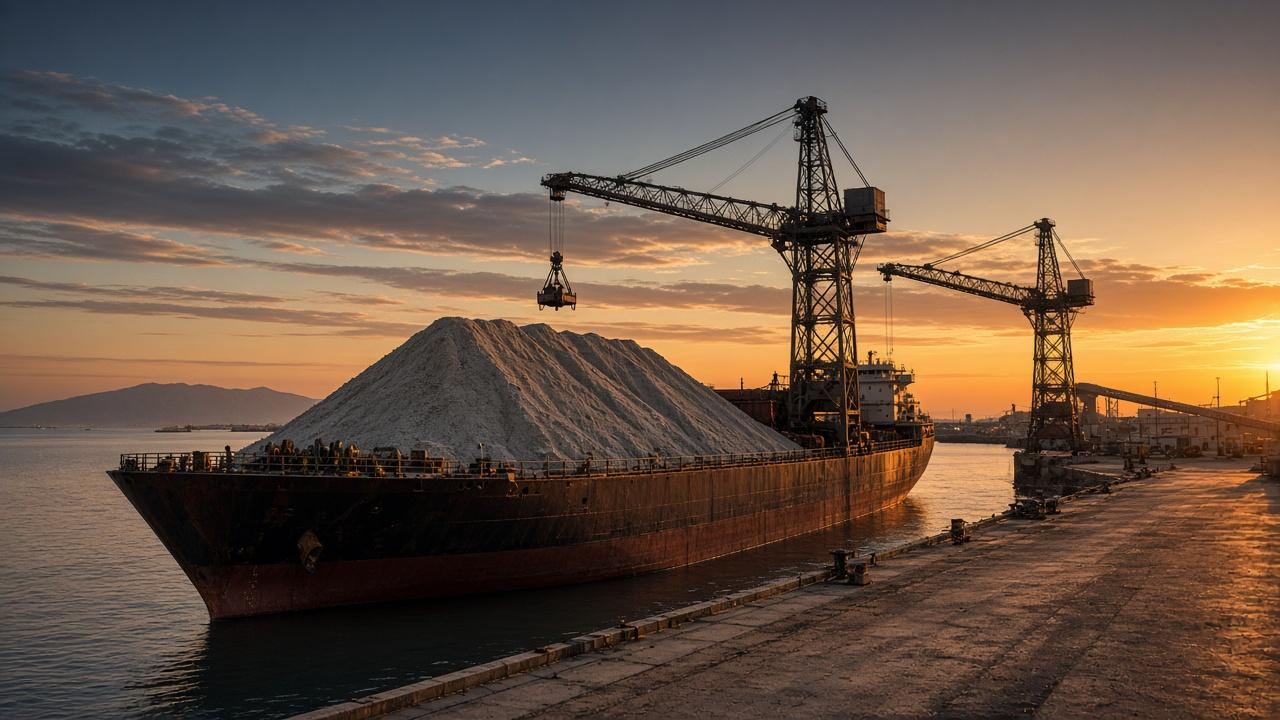
For mill supply, natural pozzolan moves as bulk. Bags and big bags are a side discussion, and only when the volume is small enough that a mill will actually take them and the supply side can pack them. A grinding plant set up for a bulk addition does not want to knife thousands of bags because a trader was more comfortable with containers.
Industrial bulk cargoes are discussed between 5,000 and 30,000 tonnes depending on product and vessel, confirmed per shipment. That bracket is a planning range, not a parcel kept on the berth. The loader, the draft, and the ship all move the number. Nothing in the range is promised until the stem is fixed.
The hold has to be dry and fit for a mineral that will be ground into cement. Previous-cargo dust, oil, or an incompatible residue is a real rejection cause. Say who inspects cleanliness, and whether a failed hold delays laycan. Rain at load and an open conveyor are how a lot that passed on the stockpile fails at discharge.
Discharge belongs in the brief. A grab discharging into a silo is not the same receiver as a plant that needs the ship's gear. Ground pozzolan and a coarse feed do not flow the same way. Weight is draft survey, belt scale, or another method both sides accept, and any moisture correction is written next to that method. The cargo is sold as loaded under the term you chose, not as a theoretical dry oxide content, unless the contract says that in numbers.
Documents, inspection and Incoterms
The document set follows the Incoterm and the destination. The usual commercial core is the invoice, the bill of lading, a weight document, and a quality certificate that repeats the tests named in the contract. A certificate of origin is added when the importer's customs file asks for it. Export paperwork on the Algerian side follows the shipment that was actually cleared, not a template we send in advance of a booking.
The quality certificate is only as useful as the clause that defines it. Name the tests, the methods, who may appoint the laboratory, and the moment the sample is taken. A sheet that says "natural pozzolan, suitable for cement" will not help a mill chemist. If an activity index is in the contract, the certificate cannot replace it with a chemical sum.
Inspection should be decided before the vessel is fixed. An independent inspector can sample at loading, seal retains, check the hold, and attend the draft survey. If a discharge sample also exists, say which one governs acceptance. Moisture can move on the voyage, so the governing sample needs a sentence of its own.
Incoterms allocate freight, insurance, and risk. They do not replace the quality clause. FOB at a named loading port means the buyer nominates the ship inside an agreed laycan. CFR means the seller arranges freight to the named port, and insurance stays with the buyer unless the term is CIF. None of the three tells the mill what fineness is acceptable. That sits in the annex, with chemistry, moisture, and the claim period.
If a bank must see a certificate before it pays, the certificate's title and issuer have to match the credit. We align documents to the deal. We do not keep a single Incoterm as a house default.
How Algerian supply is qualified
Algerian origin is a sourcing path, not a grade. NAGTAR does not publish a quarry name, a standing chemical type, or a capacity figure. When an inquiry is live, we check whether supply can meet the form, the tests you named, the volume, and a loading window. If the path is not there, the answer is no.
Qualification is a sequence. First the brief has to be complete enough to accept or refuse. Second, the supply side has to be willing to be sampled and to issue documents in the name of that lot. Third, the commercial frame (volume, term, destination, inspection) has to be one package. A lab sheet from an old campaign is not qualification of the cargo you are about to load. We use current lot data, and we say when a figure is missing.
Origin is confirmed when it can be documented for the shipment. Until then we do not describe a pit or a typical analysis. A trial lot and a repeating programme are qualified differently, and the trial still needs a spec.
What to send with the inquiry
Send one brief, even if you are also buying clinker. The pozzolan file should stand on its own page so the two qualities are not blended in a single paragraph.
- Whether you need natural pozzolan as an addition, or pozzolanic cement as a finished product
- Ground or unground, and the fineness or size method you will enforce
- The chemistry, moisture, and any activity test, with pass marks if you have them
- The cement standard or internal blend target the lot must serve
- Volume, and whether the cargo is a trial or a repeat
- Loading or discharge port, preferred Incoterm, and laycan or delivery window
- Packing, if you cannot take bulk
- Who appoints inspection, and which sample governs
A trade inquiry is the practical route. You can also start from the natural pozzolan page if you want the product framed before you write. If the answer, after review, is that you need cement or clinker instead, we will point the file there rather than stretch this product to fit.
Is pozzolanic cement the same cargo as natural pozzolan?
No. Pozzolanic cement is a finished cement that already contains clinker and a pozzolan addition, ground and sold as cement. Natural pozzolan is the addition the mill blends with clinker. If your discharge point is a ready-mix plant, a precast yard, or a contractor who must receive a certified cement, order cement and name the type. If your discharge point is a grinding plant that will combine the mineral with clinker, order the pozzolan and keep the clinker on its own contract. Mixing the two names in one purchase order is the fastest way to load the wrong product against a document set that cannot be fixed at sea.
Can the mill drop clinker and run on pozzolan alone?
Not if the binder is ordinary blended cement. Natural pozzolan reacts with lime. In a Portland blend that lime comes from the hydrating clinker. Without clinker, or without some other source of lime the process is actually designed around, the pozzolan does not become the cement. Plants that lower the clinker factor still keep a clinker share that their standard and their strength targets allow. The share is their decision, tested in their mill, not a figure NAGTAR attaches to the mineral.
A lime-pozzolan process that is not a clinker blend has to be described as such, with the lime source and the tests. We will not treat a standard cement mill as if it can delete clinker because a pozzolan cargo is available.
Why is GBFS not an acceptable substitute on this brief?
Because the cement was specified around a different addition. Natural pozzolan and blast-furnace slag do not have the same reaction, the same grind behaviour, or the same effect on shade and early strength. A standing contract that names pozzolan, and a cement type built on pozzolan, cannot absorb slag as a convenience when one ship is easier to fix than the other. The customer mix designs and the mill certificate sit on the original addition.
If slag is what you need, raise it as its own inquiry and name the form. The note on how the two additions differ is the place to settle the choice before the purchase order is signed. After signature, a swap is an amendment, with new tests.
Which tests belong in the contract if we do not have a full chemistry window?
Start with the three checks that decide handling and grind: form (ground or feed size), the fineness or size method, and moisture. Add loss on ignition if your lab already uses it as a control. Then add only the chemical headings your cement standard or your customer spec actually polices, each with a method. An activity test belongs in the contract when rejection depends on it, with the age of the test written in days so the laycan is realistic.
Do not paste oxide limits from another origin or from a slag specification. We would rather report a gap on the campaign than fill it with a number the sampler never produced.
What cargo size should we plan for?
Plan inside the industrial bulk range: cargoes are discussed between 5,000 and 30,000 tonnes, depending on the pozzolan and the vessel, and the parcel is confirmed per shipment. Your discharge rate, your silo space, and the ship's draft decide where inside that range a given stem can sit. They do not create a standard parcel we can repeat without looking.
Outside that range, say what you can actually receive. Bulk may stop making sense on a small lot, and a larger stem is a different ship. Both are confirmed per shipment.
What do we send if our only document is a cement standard?
Send the standard, and say whether you are buying the finished cement or the addition that will help you make that cement. The standard alone rarely states a purchase specification for the natural pozzolan. It states what the cement, once made, must be. Your plant still has to translate that into fineness, moisture, chemistry, and an activity rule for the addition you are willing to receive.
If you cannot translate it yet, say that. We will not convert a cement standard into a fictional pozzolan data sheet. If the document is in fact an order for pozzolanic cement, the file goes to cement supply.