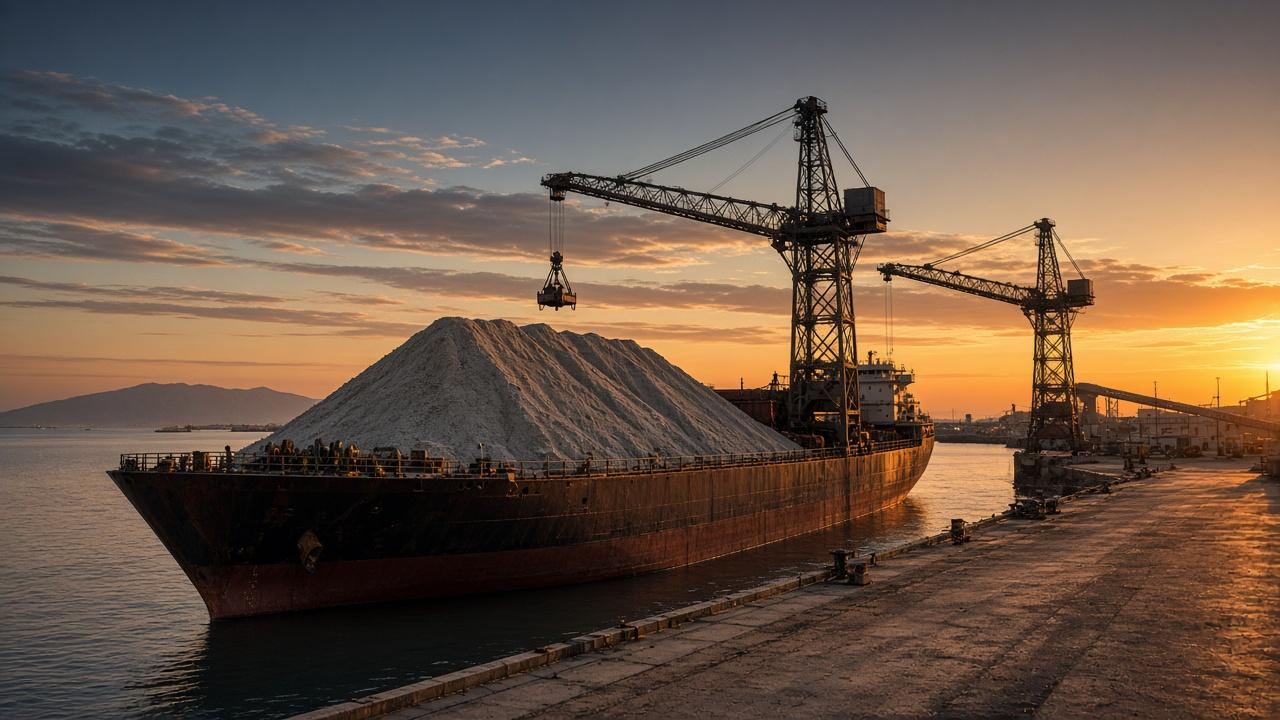
Dolomite is bought, in the inquiries we actually see, for three jobs: steel, glass and agriculture. A fourth, construction aggregate or filler, appears when the fraction and the chemistry allow it. Those jobs do not take the same stone. Raw dolomite is the carbonate rock. Calcined dolomite has been heated so that carbon dioxide leaves and the oxides remain. A steel shop, a glass batch and a farm can all say "dolomite" and mean solids that must not share a hold.
This note is about the raw stone, and about which use belongs on that booking. Size fraction, CaO and MgO are parameters confirmed on the qualified lot. They are not a window we publish. The cargo side of the same product, from fraction to draft survey, is in bulk dolomite supply. The product page is dolomite.
What buyers mean by dolomite
Buyers mean a calcium-magnesium carbonate rock, not a brand and not a single crushed size. In French correspondence the raw stone is sometimes called dolomie. The English inquiries are less tidy. "Dolomite", "dolomite stone", "raw dolomite" and "Mg limestone" arrive for the same rock and, just as often, for a rock that is only high-calcium limestone with a hopeful name. Limestone and dolomite are separated by the magnesium the buyer actually needs. If the brief has no MgO line, we ask whether dolomite is truly the mineral, or whether a limestone would satisfy the use. We do not upgrade a limestone by renaming it.
The use is the second half of the meaning. A steel buyer who says dolomite may want a flux stone, a sinter feed, or a refractory feedstock that should have been calcined before it was offered. A glass buyer usually wants a sized raw stone that will decompose in the furnace and contribute lime and magnesia to the batch. An agricultural buyer wants a grind that will react in soil, and cares about fineness and neutralising behaviour more than about a steel size specification. Construction buyers want a grading and a cleanliness suitable for aggregate or for a filler, and they will not pay steel-flux discipline for a road layer unless the contract says so.
"Dolomite for steel" is therefore a use, not a grade stamped on the quarry face. It tells us the conversation is metallurgical. It does not tell us the millimetres, the silica ceiling or whether the shop can take the carbonate or only the calcined oxide. Those three lines are the brief.
The decision: raw stone or calcined product
The decision that prevents the expensive mistake is raw versus calcined. Raw dolomite still contains its carbonate. Heated, it loses carbon dioxide and becomes calcined dolomite. Dead-burned material is calcined further, for refractory work. Those are process outcomes, not adjectives a trader can add in a recap.
If the plant will calcine, or if the use consumes the raw carbonate, the booking stays on raw dolomite. Glass furnaces commonly decompose raw dolomite in the melter. Some steel operations take raw stone as a flux or as a feed they burn themselves. Agriculture takes the raw grind. If the shop, the brick plant or the batch card says the carbon dioxide must already be gone, the booking moves to calcined dolomite. The comparison of the two purchases is in calcined dolomite versus raw. We do not offer the uncalcined stone against a calcined specification and call the gap a moisture adjustment. Loss on ignition tells the two apart. A raw stone has a high loss. A properly calcined product does not. The figure is read on the lot, against the buyer's limit, not from a catalogue.
There is a commercial decision inside the raw stone as well: one use, one fraction. A cargo sold as "dolomite, suitable for steel, glass or agriculture" is three products wearing one name. The steel shop that needed a coarse flux and the farm that needed a flour cannot be served by splitting the hold with a mobile screen after arrival, not at industrial tonnes, and not without a new contract. If a buyer has two uses, they send two briefs. We would rather qualify two lots than discover at discharge that half the ship is dust the converter will not take.
Price follows that decision. It does not lead it. A cheap raw stone offered into a refractory order is not a saving. It is the wrong solid, and the calcination the buyer then has to buy elsewhere wipes out the difference.
Specifications confirmed on the lot
We do not publish a CaO band, an MgO band or a size window for Algerian dolomite. Quarry faces vary. A screen deck set for one campaign is not the next campaign. A number on a web page becomes a claim the next lot may miss. The specification is the buyer's, checked on the qualified lot.
CaO and MgO are the identity of the lot for a metallurgical or glass buyer. They are reported by the method the contract names, on a sample of the pile. The buyer states the minimum magnesia and the lime beside it, as a ratio or as two floors. We follow the brief. We do not invent a typical analysis to fill an offer. High-calcium material that fails the magnesia line is not rounded up.
Silica, iron and alumina are the impurities buyers usually add next. Glass cares about iron because colour shows in the bottle or the sheet. Steel cares about silica because it changes the flux balance the shop already runs. Agriculture is often more tolerant of silica and more demanding about how fine the stone is. The ceilings are theirs. If they have no ceiling yet, we say so in the offer rather than borrow one from another industry.
Loss on ignition separates raw from calcined and also tells a glass or steel buyer how much carbonate they are putting in the furnace. It is confirmed on the lot. Moisture is separate from loss on ignition. A wet cargo can show a handling problem and a weight problem without being calcined or uncalcined. Both numbers belong on the certificate when the contract asks for them.
Size is a sieve specification: the passing sizes, the retained sizes, and a limit on fines. "Lumpy", "sand" and "powder" are not sieve specifications. Steel flux buyers often name a coarse cut and a tight fines limit, because dust blows off a conveyor and changes the mass that reaches the vessel of the furnace. Glass buyers often name a finer, tighter cut so the batch melts evenly and does not segregate in the silo. Agricultural buyers often name a grind. Those patterns are how buyers write. They are not a published millimetre table from this desk. Send the range you enforce. We match the lot or we decline.
A certificate from a different fraction is not evidence. If the lab sample was a washed coarse stone and the ship loads the unwashed run, the CaO may look similar while the fines and the silica in those fines do not. The lot that is qualified is the lot that is loaded.
Uses in steel, glass and agriculture, and the wrong stone
Steel uses of the raw stone are fluxing and feedstock, not a refractory lining. Raw dolomite can be charged as a flux or taken into a sinter strand, where the plant's own heat does part of the work. Dolomite for steel in that sense is a sized carbonate that brings magnesia as well as lime. It is not a substitute for lime, and it is not a substitute for dead-burned dolomite in a lining. Shops that need the oxide, with the carbon dioxide already driven off, are on the calcined product. Offering them raw stone because the chemistry on a fired basis looks attractive is a paper trick.
The useful questions are plain. Will you charge it raw? What size survives handling without a fines problem? Which impurities move the slag balance? We do not need the furnace name. We need the fraction and the limits on the raw-material specification. If that specification is written for calcined product, we change pages.
Glass uses the raw stone as a batch ingredient. The melter calcines it. The card has a size that feeds without segregating, and an iron level the colour can tolerate. A steel flux fraction, coarse and variable, shows up as stones or as segregation in the silo. An agricultural flour brings dust and a melt rate the furnace was not set for. If the card says calcined, raw stone is the wrong delivery even when CaO and MgO on a fired basis seem to match.
Agriculture uses raw dolomite as a soil conditioner, for calcium, magnesium and acidity. The buyer cares that the stone is dolomite rather than a pure limestone, and that the grind will react in the season they farm. A coarse flux stone on a field is a slow product. We do not publish a neutralising index. If the buyer has a method and a minimum, it is tested on the lot.
A clean fraction can also be an aggregate or a filler. Sell it as that use, with the grading the works require. The wrong stone is usually the neighbouring use's stone: calcined product to a farm, agricultural fines to a converter, raw flux against a refractory order, limestone named dolomite because the colour matched. Name the use, name raw or calcined, name the fraction, and read CaO and MgO on the lot you will load.
Packing and cargo
Raw dolomite for these uses moves as bulk. Big bags are a trial, a farm supply that cannot take bulk, or a small glass lot. A bag sample is not the bulk pile.
The fraction decides the cargo. A coarse stone grabs like a mineral. A grind dusts, holds moisture, and needs a different look at the ship. Fines from crushing, from the stockpile and again under the grab are part of the quality. If the contract limits fines, the loading method has to respect that limit. Pouring the dust back onto the coarse pile to make the weight breaks the specification.
Moisture is weight and, on a fine fraction, a carriage question. A coarse dry flux and a wet grind are not declared in the same sentence. Stowage follows the fraction. We do not keep one stowage factor for dolomite. Parcel size, fines and draft survey are in bulk dolomite supply.
Glass cargoes care about a hold that sheds rust or iron from a previous cargo. Steel flux cares more about size degradation and silica in the fines. Agricultural bulk cares about dust and rain. One fraction per hold. Two cuts on one ship need two holds and two sets of papers.
Documents, inspection and Incoterms
The quality certificate states that the cargo is raw dolomite, the fraction by the sieve specification, CaO, MgO, the impurities the contract listed, loss on ignition and moisture if they are contractual. It does not say "dolomite" and stop. A certificate that reports oxides on a calcined basis without saying so will be read as a calcined product by someone in a hurry. The basis of the analysis is written on the page.
Weight follows the Incoterm and the weighing rule: draft survey, belt scale, or both, with the invoice figure identified. Draft survey weighs the ship. It does not measure fines or MgO. A full set is a weight document plus a quality document from the loaded lot, not a quarry brochure attached to a draft report.
Inspection is independent sampling when the buyer wants it, with the sieve test and the chemistry run by a laboratory named in the contract. Glass buyers often want the iron result from that sample more than they want a second weight. Steel buyers often want the size distribution, because a cargo that meets chemistry and fails the fines limit is still a problem in the converter aisle. Agricultural buyers want the grind confirmed, not assumed from the product name.
Incoterms are the usual bulk set. FOB is common when the buyer controls the ship. CFR and CIF put freight with the seller, and CIF adds insurance. The term does not choose raw versus calcined, and it does not choose the fraction. Those are in the description of goods. A bill of lading that says "dolomite in bulk" is weak if the invoice says "raw dolomite, glass fraction" and the mate's receipt says something vaguer still. Align the three before the ship sails.
Origin, commercial invoice and, where the destination asks, a certificate of origin complete the file. Phytosanitary or feed-style papers are not automatic for an industrial mineral. If an agricultural buyer needs a specific declaration for import onto farmland, they say so at the inquiry. We do not invent an agricultural registration to make a steel stone look like a soil input.
How Algerian dolomite supply is qualified
NAGTAR qualifies raw dolomite from Algeria against the use and the fraction, with selected supply. We do not name a quarry in a general note. Faces, crushers and screen decks change, and a name printed here would be read as a standing grade. The buyer is entitled to know the lot, not to treat a region as a specification.
Qualification starts with raw versus calcined. If the need is calcined, we do not sample a raw pile "to see". We move the file. If the need is raw, we ask which fraction the screens can actually make in the loading window, and whether the fines that the screens remove have somewhere to go. A fraction that only exists by blending the dust back in is not the fraction in the brief.
The sample is taken from the fraction that would be shipped. Chemistry, including CaO and MgO, and the sieve result are read on that sample. A pass means the lot can be offered against the buyer's limits. It does not mean every future cargo from the same area will match. The next stem is checked again on the points the buyer treats as rejection points: often size and fines, often silica or iron, always the understanding that the stone is still raw.
We will say when a limit cannot be met. A glass iron ceiling that the available stone misses is a no, not a suggestion to try it in flint glass and see. A steel fines limit that the loading gear will destroy is a conversation about a different cut or a different loading method, held before the ship is fixed. Agricultural demand that needs a grind we cannot make in the window is a timing answer, not a coarse stone with a new label.
The lot that is documented is the lot that is loaded. If production moves to another face and the magnesia shifts, the certificate has to move with it. Standing "Algerian dolomite" language, with last year's analysis attached, is not a qualification we will sign.
What to send with the inquiry
Send the use first, then the stone, on the dolomite line. The list below is enough to start. Missing lines become questions. Questions are what delay a sample.
- Raw or calcined. If you are not sure, say what the furnace, the batch card or the soil specification literally requires. If it must already be burned, use the calcined inquiry instead.
- The use: steel flux or feedstock, glass batch, agriculture, or aggregate or filler. One use per offer.
- The size fraction as a sieve specification, including the fines limit. If you only know the use, say so and expect us to ask before we offer.
- Any CaO and MgO requirement, and the impurity ceilings you enforce, with the test basis. If you have no numbers, say that. Do not ask us to publish a window.
- Loss on ignition or moisture limits, if you have them.
- Volume, and whether this is a trial or a bulk stem.
- Packing only if it is not bulk, and why.
- Discharge port, grab or conveyor, and any hold-cleanliness rule, especially for glass.
- Incoterm and whether weight is by draft survey or scale.
- Inspection: which tests are mandatory at loading.
A target price can wait until the use and the fraction describe one lot. If you are comparing raw and calcined, say so. We will not put both in one offer and leave the choice to the master.
Is raw dolomite the same as calcined dolomite?
No. Raw dolomite is the carbonate stone. Calcined dolomite has been heated to drive off carbon dioxide. Steel refractories and any batch that specifies the burned product cannot take the raw stone in its place. Glass melters and many flux or agricultural uses are written for the raw stone and should not be shipped calcined product by mistake. The two have separate pages and separate qualifications. Loss on ignition on the lot is how the difference is shown, against your limit, not against a published band.
Can a steel shop use the raw stone?
Yes, when the shop's own specification is for raw dolomite as a flux or as a feed it will burn itself. No, when the specification is for calcined or dead-burned dolomite for refractory work. "Dolomite for steel" does not decide which of those you are. Send the size and the wording on the raw-material specification. If that wording assumes the oxides are already free of carbonate, the file belongs on calcined dolomite.
What should a glass buyer specify?
The batch card's raw dolomite: the size cut, the iron limit the colour needs, and the CaO and MgO the glass chemist already uses. Say that the stone is raw, so nobody substitutes a calcined lot because the fired-basis chemistry looks familiar. Mention hold cleanliness if rust or a previous cargo would mark the glass. A steel flux fraction is a different cut. It is not a close enough stone to try for one voyage.
Do you publish a CaO and MgO window?
No. CaO, MgO, silica, iron and the size fraction are confirmed on the qualified lot. A published window would describe a face we have not sampled for your shipment. Send the limits you enforce. We will say whether the lot meets them, or we will say it does not. A missing magnesia result is a reason to wait, not a reason to call the stone dolomite because the pile looked grey.
Is agricultural dolomite a different mineral?
It is the same mineral sold for a different use, almost always as a raw grind rather than as a steel-sized stone. The brief changes: fineness, behaviour in soil, and whatever contaminant rule the import onto farmland requires. It does not become calcined, and it does not inherit a steel flux specification. If you need both a farm grade and a steel grade, they are two fractions and two offers.
Should the ship be fixed before the fraction?
No. The fraction decides fines, stowage, moisture behaviour and whether the receiver can use the cargo. Fix the use and the sieve specification, confirm them on the lot, then talk about the ship. Parcel logic, draft survey and the tonnes we actually discuss are in bulk dolomite supply. A vessel nominated against the word "dolomite" alone is a vessel nominated against three possible cargoes.